Table of Contents
ToggleOnline proofing is a web-based workflow that allows teams to review, annotate, and approve digital files (such as PDFs, designs, and videos) in a centralized platform. It replaces email-based feedback with visual comments, version tracking, and audit logs.
Online proofing is also referred to as:
– Proofing software
– Digital proofing
– Collaborative review tools
– Document review and approval software
Online proofing tools are a category of software within:
– Project collaboration tools
– Document management workflows
– Design review systems
Whether you are reviewing marketing collateral, software prototypes, eLearning modules, or complex design files, it is the primary defense against version control errors and communication silos. By adopting an online proofing workflow, teams can reduce revision cycles by 50%, minimize costly rework, and maintain a verifiable, audit-ready trail for every change.
Teams adopting centralized review workflows report:
– Up to 30–50% reduction in revision cycles (based on internal customer data and industry benchmarks)
– 3–8 hours/week saved per project manager in feedback consolidation
– Online proofing centralizes feedback on digital files
– Eliminates email-based review chaos
– Enables visual annotations and version tracking
– Reduces revision cycles and rework
– Works across PDFs, designs, videos, and documents
Are you spending more time chasing comments via email than actually completing your project deliverables? Many project managers and creative leads struggle with “feedback friction”—the administrative tax of manual document consolidation.
The real enemy is “Revision Hell”: the inevitable chaos caused by emailing “Final_v1,” “Final_v2,” and “Final_Final_v3” back and forth until the entire team is working off outdated files. This guide breaks down the mechanics of online proofing and provides a roadmap to digitize your workflow and standardize your revision process.
Online proofing is the practice of sharing creative or technical assets with stakeholders in a centralized, web-based platform to solicit, track, and manage feedback.
Unlike traditional file sharing (e.g., emailing PDFs), online proofing platforms act as a Single Source of Truth. Stakeholders view files directly in their browser, pin comments to specific coordinates, assign action items to team members, and track the history of revisions. It transforms the review process from a static, offline task into an active, real-time collaboration phase.
Online proofing is most valuable when:
– Multiple stakeholders review the same file
– Feedback is visual (designs, drawings, videos)
– Version control errors are frequent
– External clients or contractors are involved
Manual review processes (often called old school feedback) are the silent killers of profit margins in any industry. Here is what your current process might be costing you:
Online proofing changes the revision lifecycle from a linear, error-prone chain into a structured, trackable pipeline:
Online proofing is not:
– File storage (like Google Drive)
– Project management (like Asana)
– Communication tools (like Slack)
It acts as a review layer on top of these systems.
Try zipBoard today and experience streamlined reviews, clear collaboration, and faster approvals—all in one platform.
Start Free TrialBook DemoLinear (wait for X to finish)
Parallel (concurrent annotation)
Manual file naming
Automated, timestamped log
Requires heavy software
Browser-based guest links
Disconnected
Audit-ready status logs
Common proofing tools in this category include:
Adobe Acrobat: For PDF reviews.
Bluebeam: For AEC markups.
Frame.io: For video review.
Markup.io: For web feedback.
zipBoard: For multi-format support (AEC, eLearning, and Web) in one workflow.
While many online proofing platforms focus exclusively on creative marketing assets, zipBoard is built for the complexity of AEC and technical engineering workflows. It bridges the gap between document management and active review, ensuring that your team doesn’t have to sacrifice security for speed.
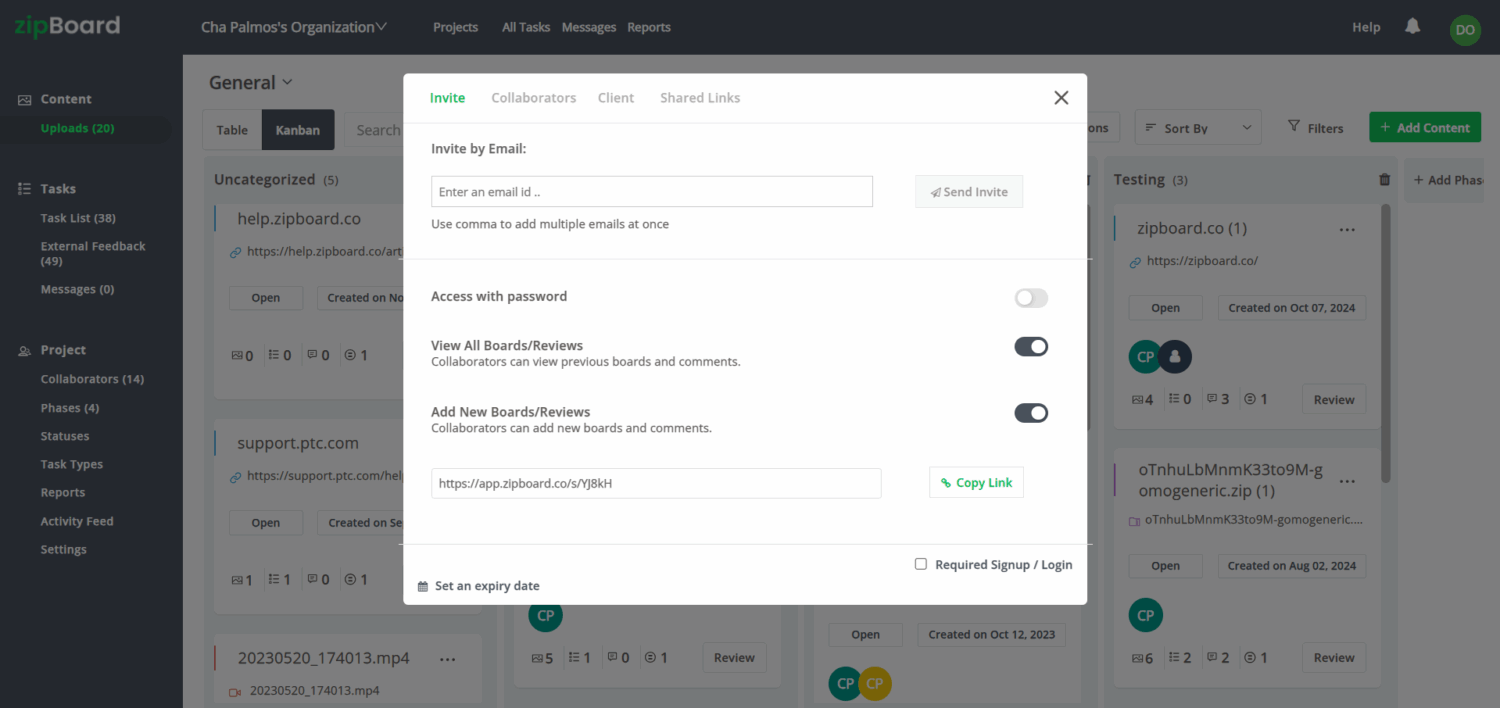
Your external consultants, clients, and subcontractors don’t need to download apps or manage licenses to give feedback. They simply click a secure link and start annotating in their browser.
zipBoard integrates with your existing file storage (like Procore or SharePoint). You can review files without moving them from your master server, maintaining a clear separation between your archive and your active project data.
Check out all available integrations to keep your team in sync and your reviews efficient.
Explore all integrations now.
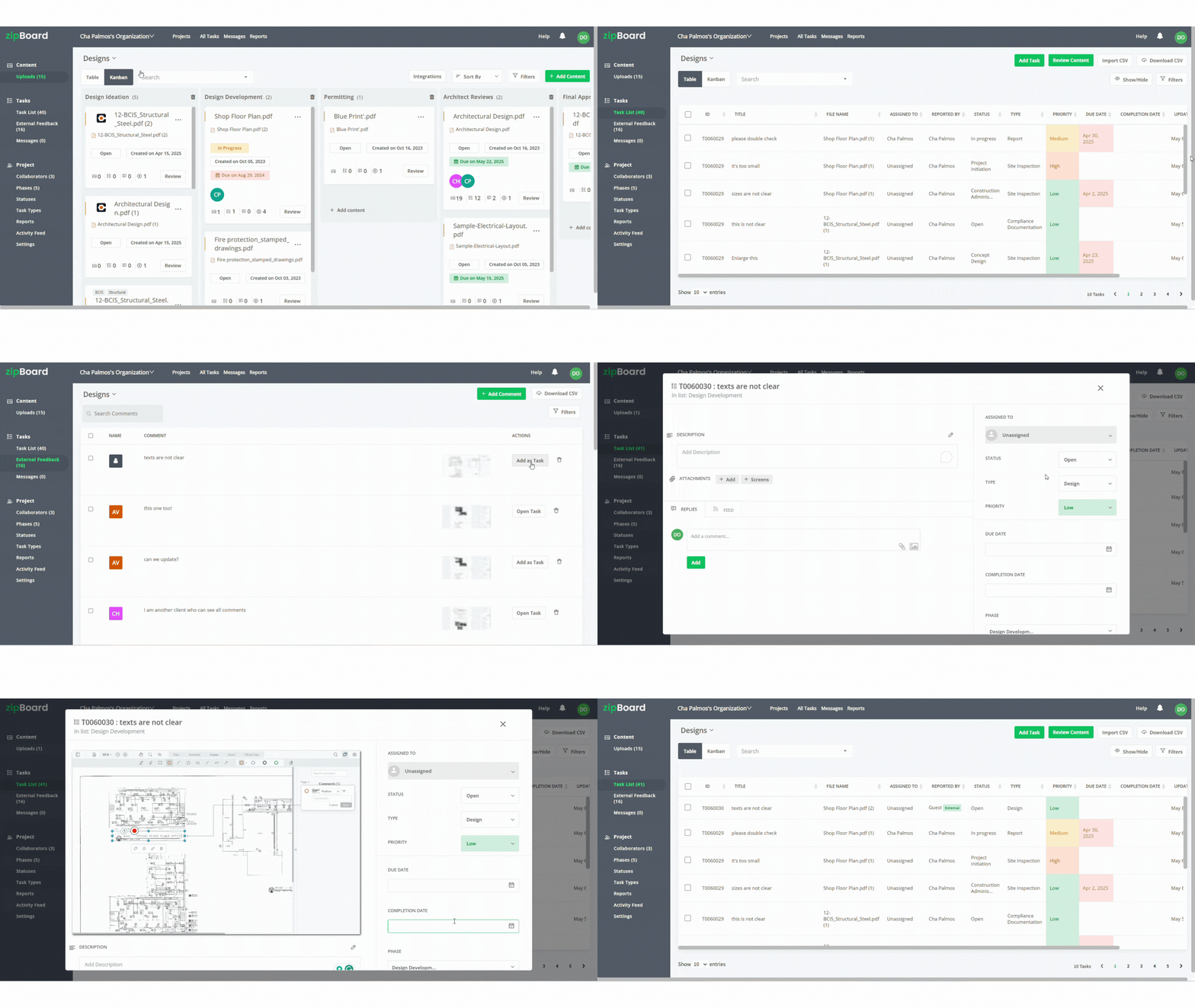
Don’t just markup—assign. zipBoard converts annotations into trackable tasks, ensuring every structural clash or design change is accounted for until it is resolved.
Convert comments into actionable tasks, assign them to team members, and track progress without switching platforms. Priorities and deadlines help keep reviews on schedule.
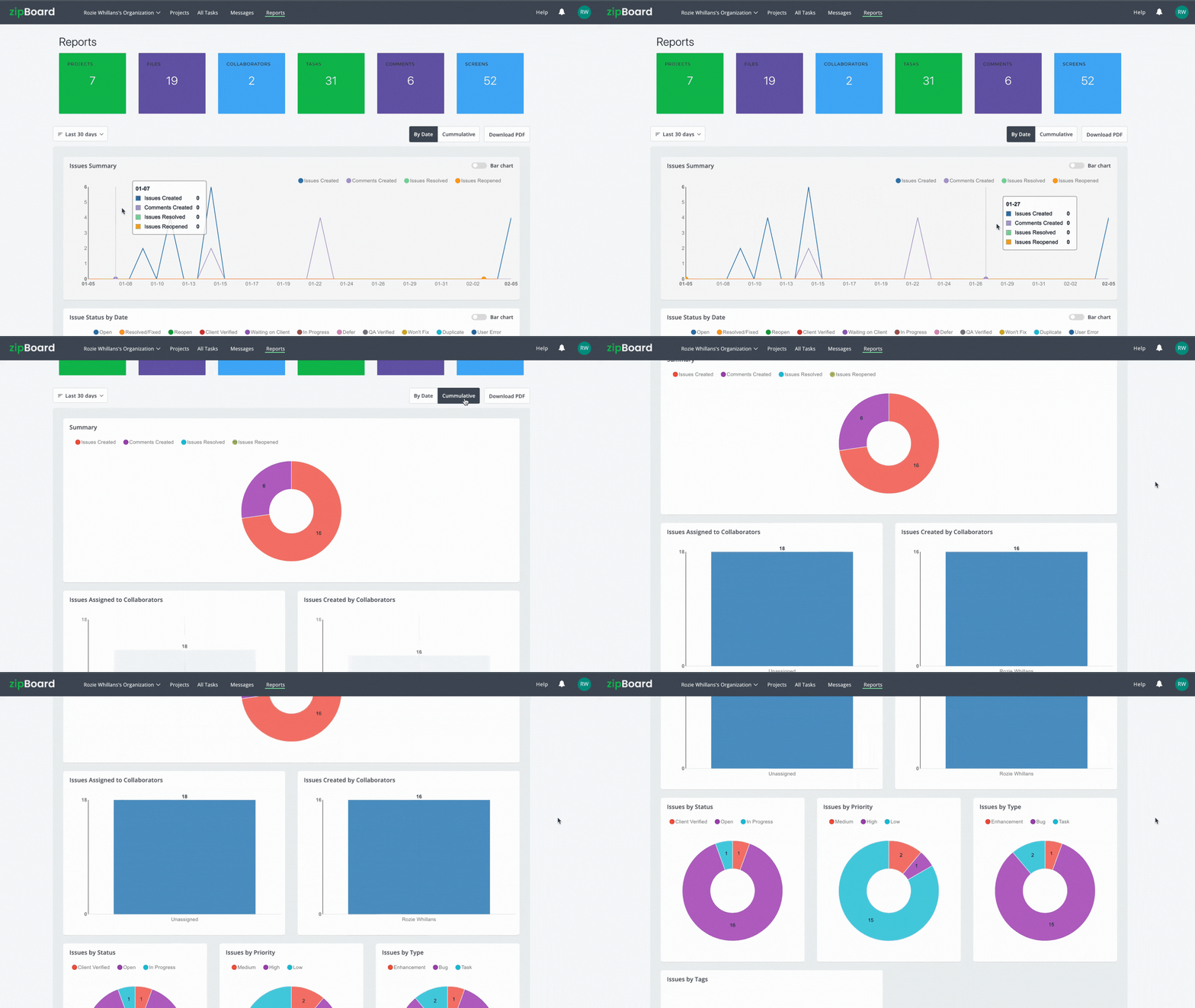
Use built-in dashboards to analyze feedback trends, identify bottlenecks, and improve processes over time with data-driven insights.
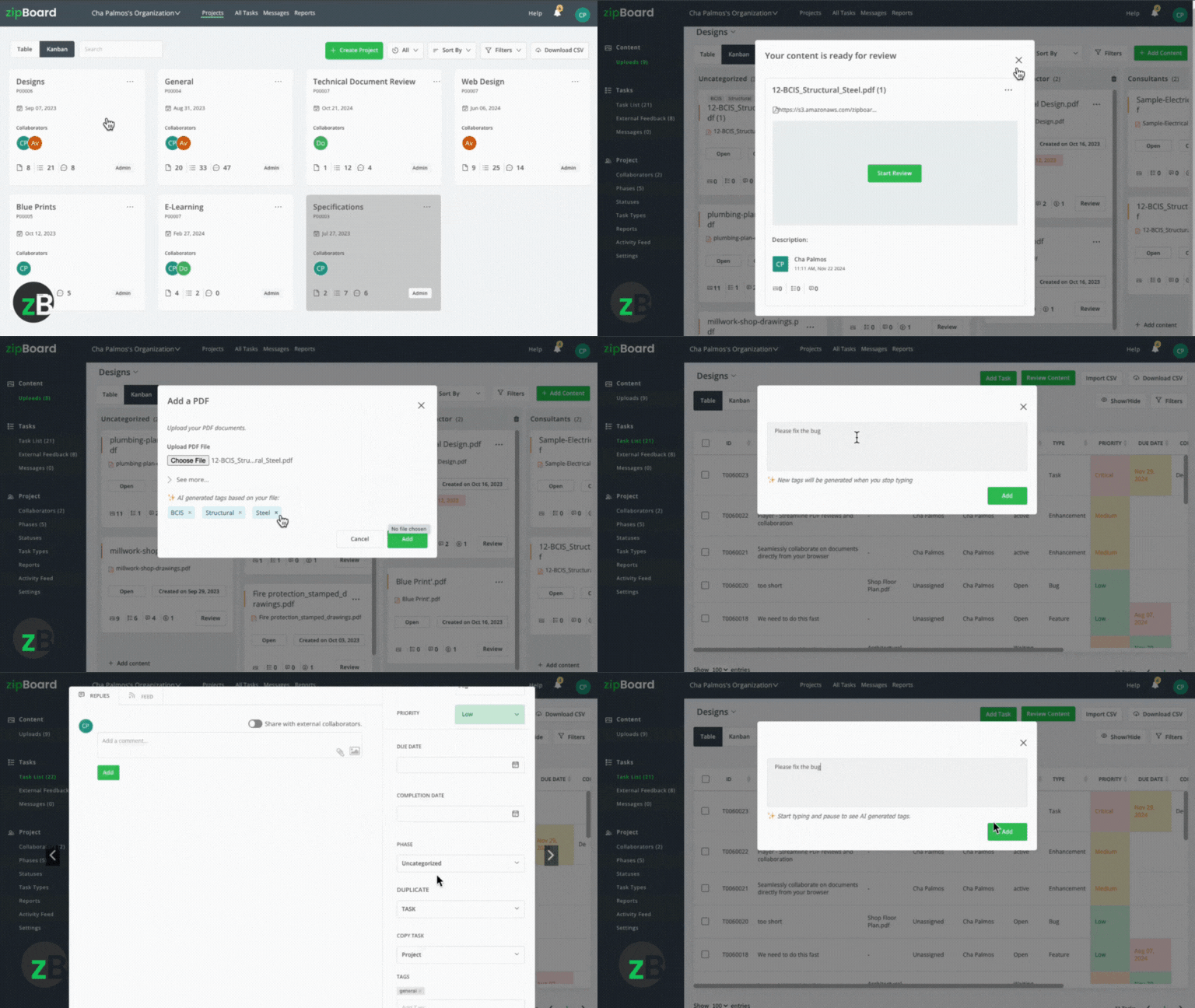
Leverage AI features to automatically categorize feedback, highlight potential issues, and streamline review cycles through smart suggestions.
Need custom integrations? zipBoard’s API and single sign-on (SSO) features make it easy to connect securely with your existing systems.
1. Upload or link a file
2. Share a review link with stakeholders
3. Collect visual annotations directly on the file
4. Convert feedback into tasks
5. Upload new versions while preserving history
Start your free trial with zipBoard and experience organized, actionable feedback across all your digital content—no setup hassles, just better collaboration.
Start Free TrialBook DemoAn online proofing platform is a specialized web-based tool where teams collaboratively review, annotate, and approve content. It replaces manual file sharing with a centralized, interactive environment where all annotations are stored in a database.
No. While highly effective for marketing, it is a business-critical requirement for the AEC industry. Construction firms use these platforms to review blueprints, MEP specifications, and shop drawings, turning redlines directly into trackable field tasks.
Not necessarily. Tools like zipBoard act as an “active review layer” that integrates directly with your storage (Procore, SharePoint, Google Drive), allowing you to keep your master files secure while you manage the feedback process.
Focus on the ROI. Compare the billable hours currently wasted on manual feedback consolidation against the cost of the platform. Often, reclaiming just 3-4 hours of a PM’s time per week is enough to justify the entire software subscription.
The transition to online proofing software isn’t just about adopting a new tool; it’s about reclaiming your team’s most valuable resource—time. By moving away from the chaos of email-based reviews and “Final_v2” file naming conventions, you eliminate the friction that stalls project momentum.
Implementing a structured document review software workflow ensures that every stakeholder—from the lead architect to the external client—is operating from the same source of truth. With annotation tools providing visual clarity and design review tools maintaining a perfect version history, you can finally put an end to “Revision Hell.”
Try zipBoard free for 14 days or book a personalized demo to see how structured feedback can revolutionize your E-learning review workflow.
Book DemoStart Free Trial©️ Copyright 2025 zipBoard Tech. All rights reserved.