Mastering Multi-Stakeholder Collaboration and Project Operations in Construction
23 Jun
Table of Contents
ToggleHow to streamline multi-stakeholder project operations in construction teams?
Advanced construction document markup software like zipBoard acts as a centralized construction project collaboration platform that unifies architects, structural engineers, and field crews on a single canvas.
By replacing offline redlines with real-time, cloud-based Issue Tracking and automated workflows, it allows teams to streamline construction document reviews, execute rigorous Quality Control in Civil Engineering, and manage RFIs and Submittals Management directly within drawing coordinates. This ecosystem minimizes field errors, supports sustainable construction parameters, and mitigates financial risk across the building lifecycle without forcing stakeholders to navigate complex signup or login walls.
The financial viability of a modern commercial or infrastructure build is won or lost in the intersections between distinct technical disciplines. When developers, structural engineers, architects, interior specialists, and field superintendents operate in communication silos, project health degrades rapidly. Miscoordinated design handoffs do not simply cause administrative friction; they manifest physically on-site as expensive re-work, punctured contingency budgets, and devastating schedule delays.
Historically, managing feedback across an expansive network of project participants required chasing paper blueprint sets, shipping massive email attachments, and updating disconnected tracking spreadsheets. Today, forward-thinking Construction firms are abandoning these fragmented, manual approaches. They are replacing them with a unified construction project collaboration platform driven by specialized construction document markup software like zipBoard.
By centralizing the interactive canvas where complex design concepts meet field execution, teams can transform a chaotic, multi-party review cycle into a highly predictable, synchronized, and transparent operation.
The Complexity of the Multi-Stakeholder Review Process
A modern capital project relies on a complex web of specialized consultants, each evaluating contract documentation through an entirely different operational lens. Managing a comprehensive Multi-Stakeholder Review Process requires a technology engine capable of balancing these conflicting technical viewpoints simultaneously.
Architectural and Structural Engineering Design Alignment
Architects focus heavily on spatial intent, programmatic flow, building envelopes, and aesthetic expressions. Concurrently, structural engineers must evaluate load paths, shear forces, foundation dynamics, and strict local building code compliance.
When these two foundational worlds cross—known as architectural and structural engineering design integration—any minor uncoordinated change can introduce severe structural risk. A relocated utility corridor or an altered load-bearing wall must be evaluated by both parties immediately on a shared canvas before the drawings are issued for construction.
The General Contractor and Subcontractor Reality
While design professionals focus on theoretical intent, field execution teams look at drawings through the lens of constructability, trade sequencing, safety clearance, material procurement lead times, and daily crew productivity. Without an authoritative, cloud-based workspace to capture and overlay these diverse perspectives, cross-functional design feedback will clash, resulting in critical omissions on the job site.
De-Risking Projects with Strategic Pre-Construction Workflows
The absolute most cost-effective moment to resolve a spatial collision, an uncoordinated utility routing, or a material specification error is before field mobilization begins. Utilizing an advanced digital canvas as an aggressive pre-construction tool fundamentally shifts an organization’s quality culture from a reactive, firefighting model to an intentional, data-driven exercise in risk management.
Catching an issue on a high-resolution vector canvas costs virtually nothing. Correcting that exact same conflict when pouring foundation concrete or assembling fabricated structural steel can bankrupt a project’s contingency reserve. Modern, predictive Construction Workflow Management frameworks rely heavily on resolving these interdisciplinary clashes early, clearing the path for optimized field production schedules.
Want to See Modern Drawing Approval in Action?
Let's look at how teams are doing it these days.
Click HerePre-Construction Risk Mitigation in zipBoard
| Pre-Construction Risk Area | Manual/Traditional Impact | zipBoard Cloud Mitigation Framework |
|---|---|---|
| Interdisciplinary Collisions | Discovered during framing; stalls multiple trades on-site. |
Early Detection Detected early via pinpoint coordinate markers on a unified vector canvas. |
| Outdated Sheet Usage | Crews build from expired prints, forcing field demolition. |
Version Control Automated task tracking management and automated document versioning (version stacking). |
| Ambiguous RFI Context | Endless email chains try to locate a vague problem area. |
Visual Context Field users pin a live, visual task directly to exact blueprint grid lines. Comments can be added in the same thread to clarify the feedback. |
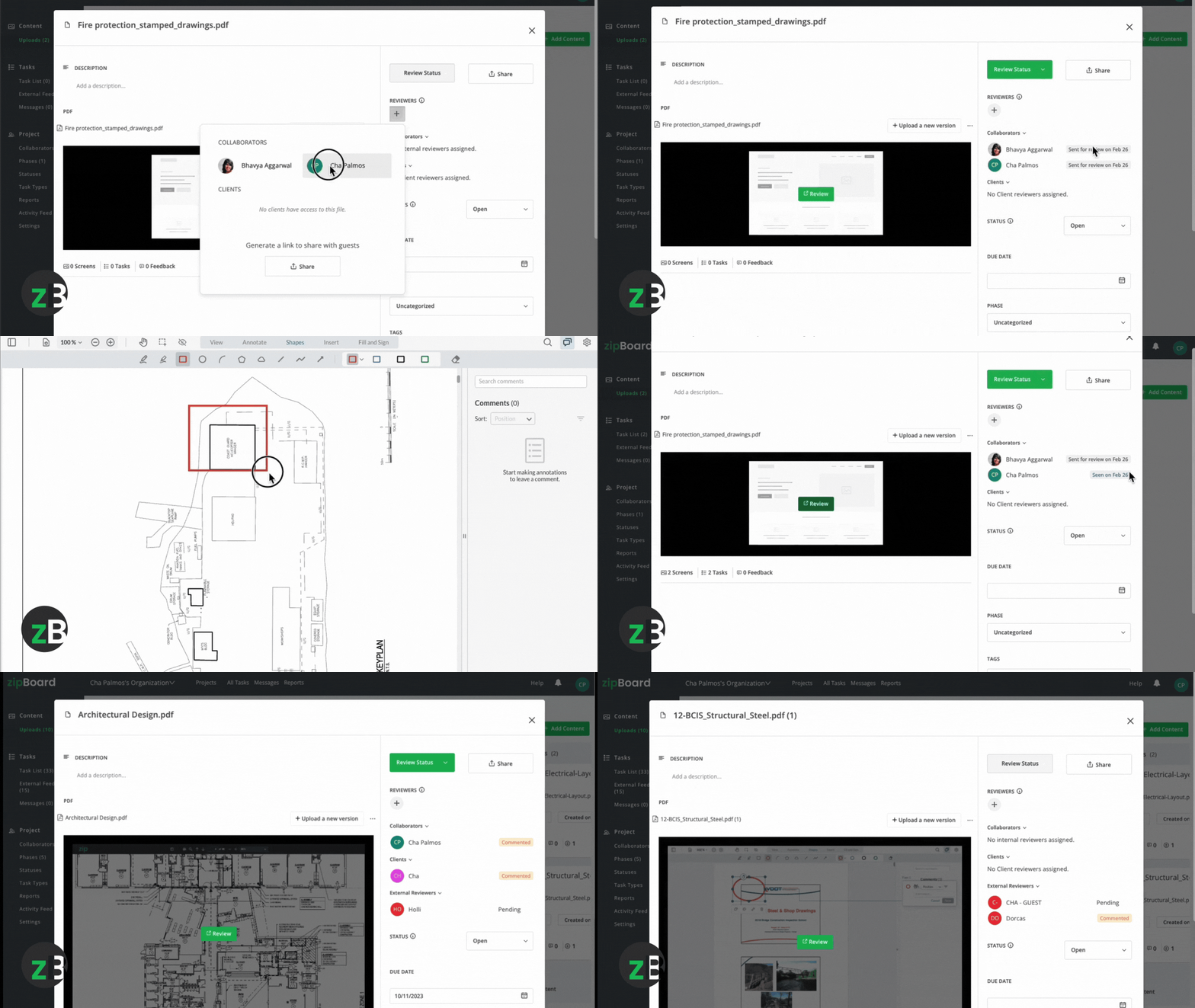
A robust digital markup infrastructure driven by zipBoard allows cross-functional teams to actively validate project documentation simultaneously—all without forcing external stakeholders to create an account, complete a profile, or navigate complex login screens. By stripping away administrative barriers, zipBoard focuses entirely on visual clarity and immediate accessibility through three core pillars:
Pinpoint Clear Canvas Annotations
Instead of forcing teams to describe spatial errors through lengthy emails, zipBoard functions as a highly precise visual construction drawing review tool. Users can drop exact coordinate pins, draw vector shapes, and write text callouts directly on the drawing canvas. Whether an architect identifies an aesthetic conflict or a contractor spots a physical clash, the markup is unmistakable. With a single click, that exact freehand redline or comment is instantly converted into a trackable task, eliminating ambiguity and keeping your Issue Tracking perfectly organized.
Effortless Multi-Stakeholder Review Tools (No Signup, No Login)
True project velocity requires input from clients, inspectors, and third-party consultants who don’t have time to learn a new software suite. zipBoard solves this by offering a completely frictionless review environment. Managers can share a secure access link with external partners as Guest Reviewers. These stakeholders can instantly open the file, view active markups, and add their own feedback in real-time—with zero learning curve, zero signups, and zero logins required. This open approach removes communication friction and ensures comprehensive Project Documentation Collaboration across every tier of the project.
Clear and Immutable Version Control
When multiple trades collaborate on changing files, building from an outdated blueprint is a massive financial risk. zipBoard simplifies your Construction Workflow Management by providing automated sheet stacking and clear version tracking. When a new file iteration is uploaded, the platform preserves the previous version’s audit history while stacking the updated sheet to the team. Field supers and remote engineers can toggle between revisions instantly, ensuring the entire team is locked onto the absolute latest authorized plan.
Streamlining Construction Document Reviews
The traditional, fragmented methodology for executing Construction Drawing Reviews is a leading driver of project delivery delays. Printing physical blueprint sets, marking them up with colored ink, scanning them back to flat PDF files, and circulating them via email chains creates dangerous information silos. Critical designer feedback gets buried in private inboxes, accountability vanishes, and version control fails.
To protect schedules and margins, construction teams must streamline construction document reviews by moving the entire collaborative environment into a secure cloud workspace. Deploying zipBoard as your primary web-accessible construction drawing review tool empowers distributed teams to review massive drawing sets concurrently, completely independent of their physical office or field location.
When a structural engineer, a lead architect, an MEP consultant, and an interior designer can log into the exact same vector canvas at the exact same time, the speed of design coordination increases exponentially. Instead of waiting days for feedback to slowly filter through a manual, linear distribution chain, stakeholders can debate and resolve complex engineering conflicts during a single, coordinated live digital review session. This centralized ecosystem drives active Project Documentation Collaboration, creating an unalterable, time-stamped digital history of every annotation, change request, and status update.
Capture the Who, What, When, Version
Every approval record must include the reviewer’s name, decision, timestamp, and the exact drawing version ID (e.g., Rev 2, Sheet A101).
Centralize Everything in a Single Source of Truth
Whether a submittal log or a cloud platform, everyone checks one place. No exceptions.
Automate Timestamps
Manual date entries cause errors. Use platforms that auto‑stamp the moment an approval is clicked or feedback is added.
Enforce Strict Version Control
Standardize naming (e.g., A101_Rev2_2026-03-27) and lock or archive superseded drawings the instant a new revision publishes.
Tie Comments to Specific Versions
Feedback must reference the exact revision and document reviewed (e.g., “Rev 2, Sheet A101”). Never use generic labels like “the latest drawing.”
Control Publishing Rights
Only the PM, Design Manager, or designated coordinator can upload new revisions to prevent unauthorized “final” versions from external collaborators or guest reviewers.
Field Operations: Tracking Progress and Enforcing Accountability
Once a project transitions from the pre-construction planning phase to active on-site field assembly, the primary operational challenge shifts from theoretical coordination to absolute field accountability. Managing field production requires a dynamic software infrastructure that links design drawings directly to daily trade execution.
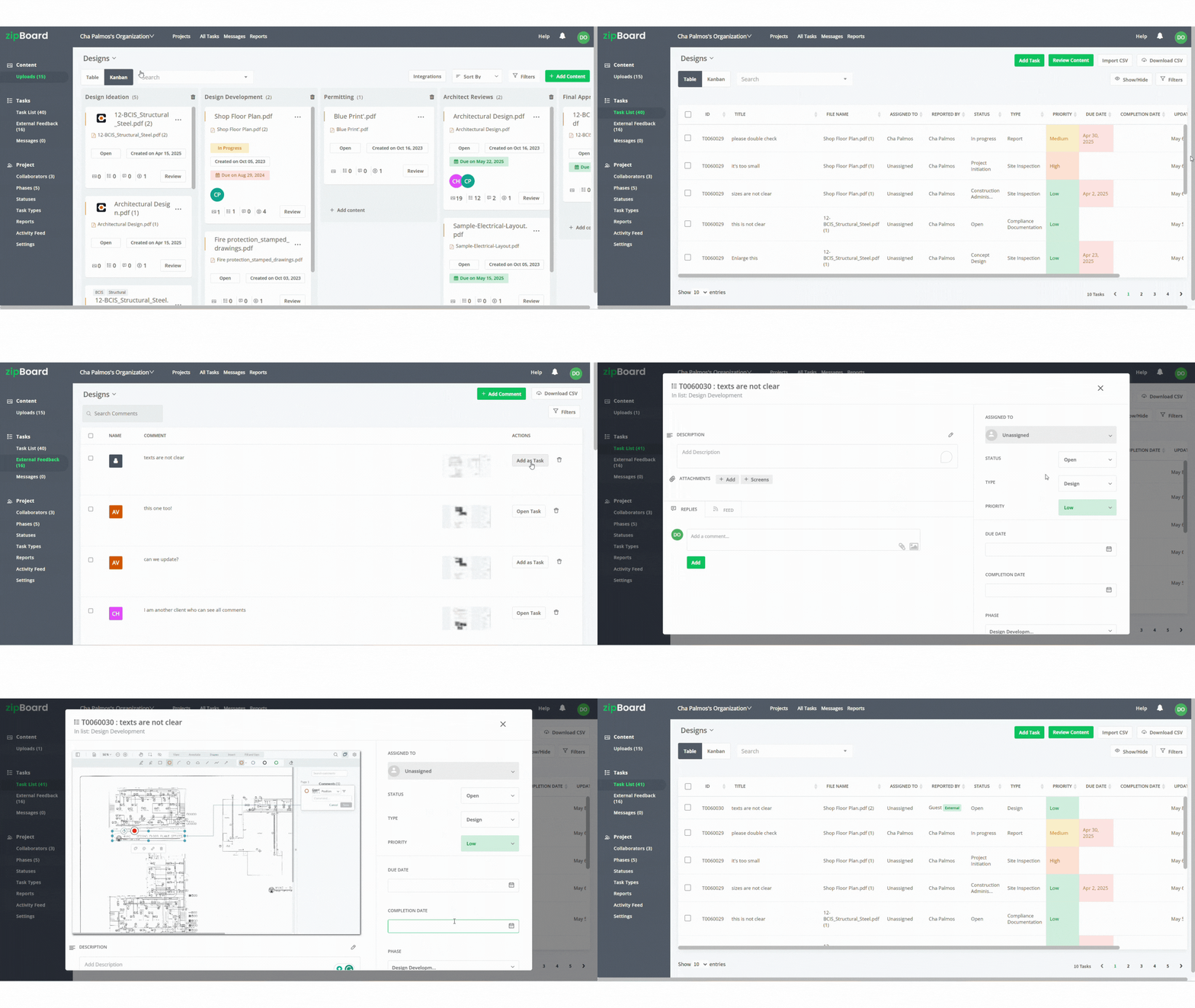
Integrating zipBoard’s high-performance construction project workflow software platform equipped with real-time, automated Issue Tracking changes how field supers report and resolve non-conformance items. When a field superintendent identifies a plumbing clearance issue on-site, they no longer need to write a lengthy report or leave phone messages. They simply open their mobile tablet, drop a digital pin on the exact canvas coordinates, snap a photo of the physical field condition, and assign the task directly to the responsible trade partner.
This transparent, location-linked data capture optimizes the entire RFIs and Submittals Management pipeline. Because the request is anchored directly to precise structural coordinates, engineering teams can instantly visualize the physical context, evaluate alternative designs, and issue an authorized clearance sheet without administrative delays. Furthermore, aggregating these open field flags into zipBoard’s centralized Construction Progress Tracking Tool dashboards provides project managers with an immediate look at overall project health, trade response times, and potential blockers before they threaten the critical path milestone.
Transform Your Construction Document Review
Try a 14-day free trial or book a quick 15-minute walkthrough call with us.
Sign UpBook a DemoElevating Your Project Communication
At its core, successful project execution is a communication challenge. True project velocity is never achieved by pushing field crews harder on the job site; it is unlocked by eliminating data friction, ambiguity, and latency during the planning, review, and engineering clearance cycles.
Investing in a platform like zipBoard balances advanced, real-time communication and collaboration in construction with structured database tracking, ensuring that your operational workflows remain resilient from initial design through final building handover. Unifying your project teams around a singular, authoritative construction document markup software canvas protects thin margins, reduces field re-work, and gives every single stakeholder a clear, transparent, and frictionless path to execution.
Don’t guess at your overhead. Use our interactive ROI calculator to toggle your internal hourly rates and team size to see exactly how much time is being siphoned by manual consolidation and legacy workflows. Discover why making the shift to premium Construction Markup Software pays for itself in less than a single project lifecycle.
Frequently Asked Questions
No. One of zipBoard’s primary strengths is its completely frictionless guest access. External stakeholders, municipal inspectors, and owners can access the drawing canvas, review existing notes, and drop pinpoint callouts via a secure link with no login, no signup, and no software onboarding required.
zipBoard converts visual annotations directly into actionable database items. Instead of tracking RFIs in an isolated spreadsheet separate from the plans, the software links the request directly to blueprint coordinates. This ensures engineering teams can view the exact spatial context immediately, cutting response latency in half and keeping the submittal pipeline moving forward.
Connecting a Construction Progress Tracking Tool with automated Issue Tracking gives project managers an immediate look at trade performance and punch list velocity. Instead of guessing progress based on manual field updates, managers can see exactly how many design updates or field anomalies are open, pending, or cleared across the drawing coordinates via zipBoard’s centralized dashboard.
zipBoard acts as a powerful pre-construction tool by enforcing standardized design verification paths. It automates sheet stacking for clear version control, matches comments to the correct drawing iteration, and surfaces interdisciplinary coordination issues before materials are ordered, avoiding expensive field demolition.
Recent Posts
- 7 Best Fieldwire Alternatives for Construction Teams September 29, 2026
- How to Track Content Approvals Across Multiple Projects (Without Missing One) September 25, 2026
- How to Compare Two PDF Versions Without Losing Track of Changes September 1, 2026
- Why IT Teams Are Getting Out of the PDF Review Server Business August 20, 2026
- The Real Cost of Adobe Acrobat for Documentation Teams August 19, 2026
©️ Copyright 2026 zipBoard Tech. All rights reserved.